
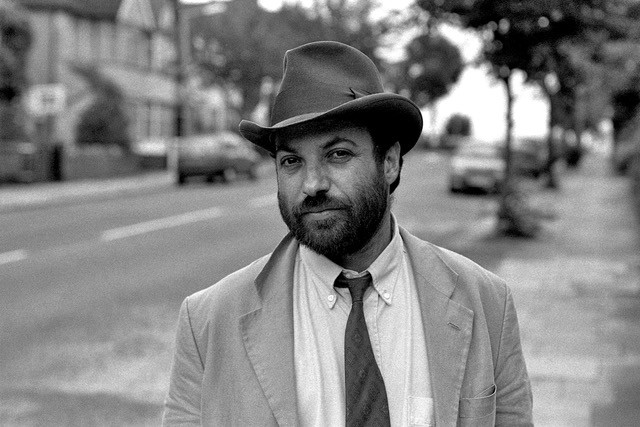
The Cricket Media Club was deeply saddened to hear of the passing of Rob Steen last week at the age of just 67. Please take a few minutes to read this touching obituary by Matthew Engel in memory of a fine cricket writer, colleague and friend of the game.
By Matthew Engel
In the early 1980s a wannabe journalist with no experience whatever was sent by the Hayters news agency to a Birmingham City reserves’ away match. One of the Brummie papers wanted a report on the form of one of the team’s star turns, Mark Dennis, who was recovering from injury. The young man grabbed an interview with Dennis, wrote his story and went home contentedly. It could easily have been the last piece he ever filed as well as the first.
Dennis had made comments about the Birmingham manager, Ron Saunders, that were deemed libellous and the piece was spiked. For three months the greenhorn was blacklisted by Hayters before being given a second chance. Eventually, he became one of the most extraordinary characters on the cricket reporting circuit which at that time was full of them.
He was Rob Steen and I have never met anyone even remotely like him. Rob died on 19 September, aged 67, in a Rotterdam hospital having failed to regain consciousness after suffering a heart attack in the street.
The first and most important fact about Rob is that no one could possibly have disliked him. He was immensely compassionate. David Hopps recalled the England A tour to Sri Lanka in 1991 when Rob was working as a freelance on a rock-bottom budget while – in those halcyon days – the staffers had money coming out of their ears. So they helped him out. But they were a bit miffed when they saw him giving it away to the local beggars.
I witnessed Rob’s passion for the underdog in another way. He and I went on several trips to the US to watch baseball, a shared pleasure. He supported the New York Mets but if they were playing a really bad team he would change allegiance and cheer for the perennial losers. I have never, ever met anyone else who did such a thing.
Even amid the hurly-burly of deadlines, he could be thoughtful. When subbing on The Guardian, according to Paul Weaver, Rob was the only person on the desk who would habitually ring him up if the piece had to be cut and ask which sentence he would least mind losing. And another word crops up from almost everyone: “enthusiasm”. He always had a flair for new ideas.
He was born in London to a Jewish family and grew up in Chigwell and then Stanmore, where he won a scholarship to John Lyon School and bowled “over-flighty off-spin” (his words) for Stanmore Colts. His further education came from the University of Life – trainee accountant, estate agent, baker, theatre publicist and dole queuer. He once told me he had thought about becoming a rabbi; that was definitely not one of his best ideas.
Instead, he survived his disastrous debut with Hayters, the basic training ground for hundreds of sports writers (the boss, Reg Hayter, also played cricket for Stanmore which may have helped) and went on to work across the gamut of up-market sports writing: The Guardian, Sunday Times, Telegraph and Independent. He was given a leg-up by David Frith, then editor of Wisden Cricket Monthly; Frank Keating said he was “one of the brightest of a new crop of excellent young cricket writers”. But not everyone was a fan of Rob’s work.
He loved music, as did his father John, whose tastes were more classical. Rob was different, and furthermore seemed to think everyone else was familiar with his latest passion. One critic said reading a Steen cricket report required “a working knowledge of the oeuvre of Steely Dan” He could have added Todd Rundgren and Joni Mitchell’s jazz phase. Some subs were inclined to get out the blue pencil whenever his copy landed.
All writers have their faults and Rob’s may well have been self-indulgence but, looking through the files, his work reads well. He was at his best, I think, in the Sunday Times, which had the time and space for long features and also in his books. There are 13 in the MCC Library, which does not include his biography of Sonny Liston. And he did have many good ideas. The MCC also has the four editions he published of The New Ball, a forum for long cricket reads, which he started in 1998. It did not last, but was the precursor to The Nightwatchman which with the Wisden imprimatur has now passed its half-century. It was a good idea before its time.
His best cricket book was surely 500-1, The Miracle of Headingley ‘81 – written in 2001 with his friend Alastair McLellan, which was ground-breaking in taking a single match and putting it in its cricketing and social context. This was an idea that really worked. “He was obsessed with originality,” said Alastair. “So much so he never read novels in case he accidentally picked up something that had been done before. He left a very distinct body of work and I think he will be rediscovered.”
In 1999 I had dinner with Rob in an Italian restaurant in Islington. He told me he and his wife, fellow journalist Anne Taylor, had decided to move from their flat in Alexandra Palace to Cornwall. On one level it made sense: a family of five was swapping a small flat for a seven-bedroom house in Falmouth. And it was an adventure. But Rob was irredeemably metropolitan. I am not entirely sure he could have identified a daffodil. And the move meant about three hours to the nearest county ground. He continued covering cricket, which sometimes involved the night sleeper. All this may have contributed to the (amicable) break-up of his marriage.
The plus was that he found a new niche: teaching sports journalism at what is now Falmouth University. Later he moved back nearer his comfort zone to do the same at Brighton University. “He had no grounding in academia,” said Rob’s colleague Jed Novick, “and his teaching was, well, eccentric. But he took it very seriously and the kids respected the fact that he knew more about sport than anyone else around. And also that he cared about them”.
That rings true but so does his disdain for orthodoxy. He was one of life’s scruffs, even if invited to the formal Wisden dinner; he hated driving; he was always much keener on spliffs than booze. His move to Rotterdam was characteristically quixotic. But he soon became a well-known local character. His son Joe, now a journalist himself, explains: “He befriended the manager of his favourite cinema in Rotterdam, which he visited pretty much daily. A lovely chap called Arthur. He said he loved Dad’s passion for film and got him to write brochures with reviews of the films being shown. Dad even curated a mini film festival which will be screening there next month. He really did make things happen, that man.”
Rob leaves his mother Shirley, sister Jane, and the children he adored – Laura, Joe and Evie. Anne and the children attended a private cremation in Rotterdam on Tuesday serenaded by Van Morrison’s Everyone. There will be a memorial event in London on a date to be announced. It is unlikely to be a traditional one.
A truly wonderful tribute. Thank-you. Matthew
I don’t know where to start with this marvellous and heartfelt tribute to my dearly loved cousin and friend. Thank you, Matthew.
I found myself alternately chuckling in delight and, how to say, having a wee moment. It gives me thoughts of a Wildean short story or even an Andersen fairy tale. “The Rabbi and the Daffodil”…
What is most brilliantly captured is the “warts and all” approach. For Rob’s “warts” were truly worth more and, beyond any reasonable doubt, more interesting than almost anyone else’s “all”.
xxx
Lovely. I was lucky to have interviewed Rob for my book on the County ground at Hove. It was truly one the the most enjoyable interludes of my life. Kindness and enthusiasm infused the evening. P.S He was wearing a Todd t-shirt and a Yankees hat!
Thank you for this tribute! Loved Rob’s writing in a cricket group that we were both part of and wanted to meet him in person. Alas that was not to be but learnt more about him through this tribute of yours! RIP Rob!
Rob and I were cousins and exactly the same age. We grew up together albeit on different continents. We saw much of one another as youngsters and young adults, not so much lately. He was a mensch, irrepressible, irreverent, and a truly wonderful human being. I miss him. May his memory be a blessing.
I first knew Rob as a sports-desk character and lover of sport and sports writing. Then we realised we both loved Steely Dan and Todd Rundgren. He wasn’t that fussed about more recent favourites of mine but, typically, pledged to plough through them. Matthew, as ever you have captured the spirit of the man in your inimitable fashion. Thank you.
I am so saddened to hear that. Rob was a good and hospitable friend, and I twice had the pleasure of visiting him and his lovely family in Falmouth. We shared the Oval Test match against West Indies in 1966 as the start of our passion for cricket. His writing was at times something else, but always interesting and informed. He was a great character and I am sorry he didn’t stay in touch.
I don’t know where to start with this marvellous and heartfelt tribute to my dearly loved cousin and friend. Thank you, Matthew.
I found myself alternately chuckling in delight and, how to say, having a wee moment. It gives me thoughts of a Wildean short story or even an Andersen fairy tale. “The Rabbi and the Daffodil”…
What is most brilliantly captured is the “warts and all” approach. For Rob’s “warts” were truly worth more and, beyond any reasonable doubt, more interesting than almost anyone else’s “all”.
xxx
Terrible terrible news
As one of his music pals noted “I never met a more singular human being”. Any touring cricket scribbler seeking colleagues of a diverse hinterland over the last four decades need have looked no further. Rob Steen, or Reuben Finklestein as he self-styled himself of late, would be your man.
Rest well old friend, forever dreaming of the Dan.
A fabulous and fitting tribute to a lovely and unique man. Thank you
If only those destined to be the subject of a Matthew Engel obituary knew that to be the case. Maybe some do? It really is the ultimate honour, and this is another wonderful piece. Rob was on the Indy on Sunday team that I was a part of, and Matthew you’ve captured him beautifully.
A lovely tribute to this singular man, even in a club full of eccentrics. Thank you Matthew.
A lovely tribute to this singular man, even in a club full of eccentrics. Thank you Matthew.
what a lovely tribute to the man & his family, whom we shared a house with in Alexandra Park Road, Rip Rob condolences to his family
A lovely tribute to a singular man, even in our club of eccentrics. Thank you Matthew.
A memorial for my late father, Rob Steen, is to take place at Conway Hall in London on Friday 21 November. The ceremony will begin from 4pm and is open to all.
But, if you plan on coming, please do RSVP.
Address: Conway Hall 25 Red Lion St, London WC1R 4RL
RSVP: jmtsteen@gmail.com
Hi Joe. It’s Ann Hern (née Rothman) here. I’m a third or forth cousin of your father’s, on the Lipetz side. The last time I saw you and your family was at your flat in Muswell Hill when you were a kid. Rob and Jane used to come to my family’s house in Golders Green with their parents, John and Shirley. I’m exactly your father’s age, so we met as kids together.
Anyway, of course I was immensely saddened to hear of your father’s sudden passing. I would like to come to the memorial tomorrow and sorry for the short notice. Hopefully see you tomorrow.
A lovely cousin and friend – my daughter and I had a fabulous stay in Cornwall with you when we exhibited Auntie Hannah’s art down there .
So sorry I can’t be at the memorial but my sister Lynn will be there.
Wishing the family a long life
What a heartfelt and beautiful tribute to Rob. As children, our families spent a lot of time together, memories of holidaying in a cottage in Devon, playing cricket on the lawn and the music of Steely Dan as a backdrop in our early teens.
Time passed, so pleased to have met up with him a few years ago and reminisce, laugh and remember his enthusiasm and warmth.
xx
What a heartfelt and beautiful tribute to Rob. As children, our families spent a lot of time together, memories of holidaying in a cottage in Devon, playing cricket on the lawn and the music of Steely Dan as a backdrop in our early teens.
Time passed, so pleased to have met up with him a few years ago and reminisce, laugh and remember his enthusiasm and warmth.
x